
Functional Build
Forms, content, interactions and business functionality that actually work.
Website Development
We develop responsive, maintainable websites that do more than display information — they handle enquiries, manage content, connect useful functionality and give your business a reliable digital foundation.
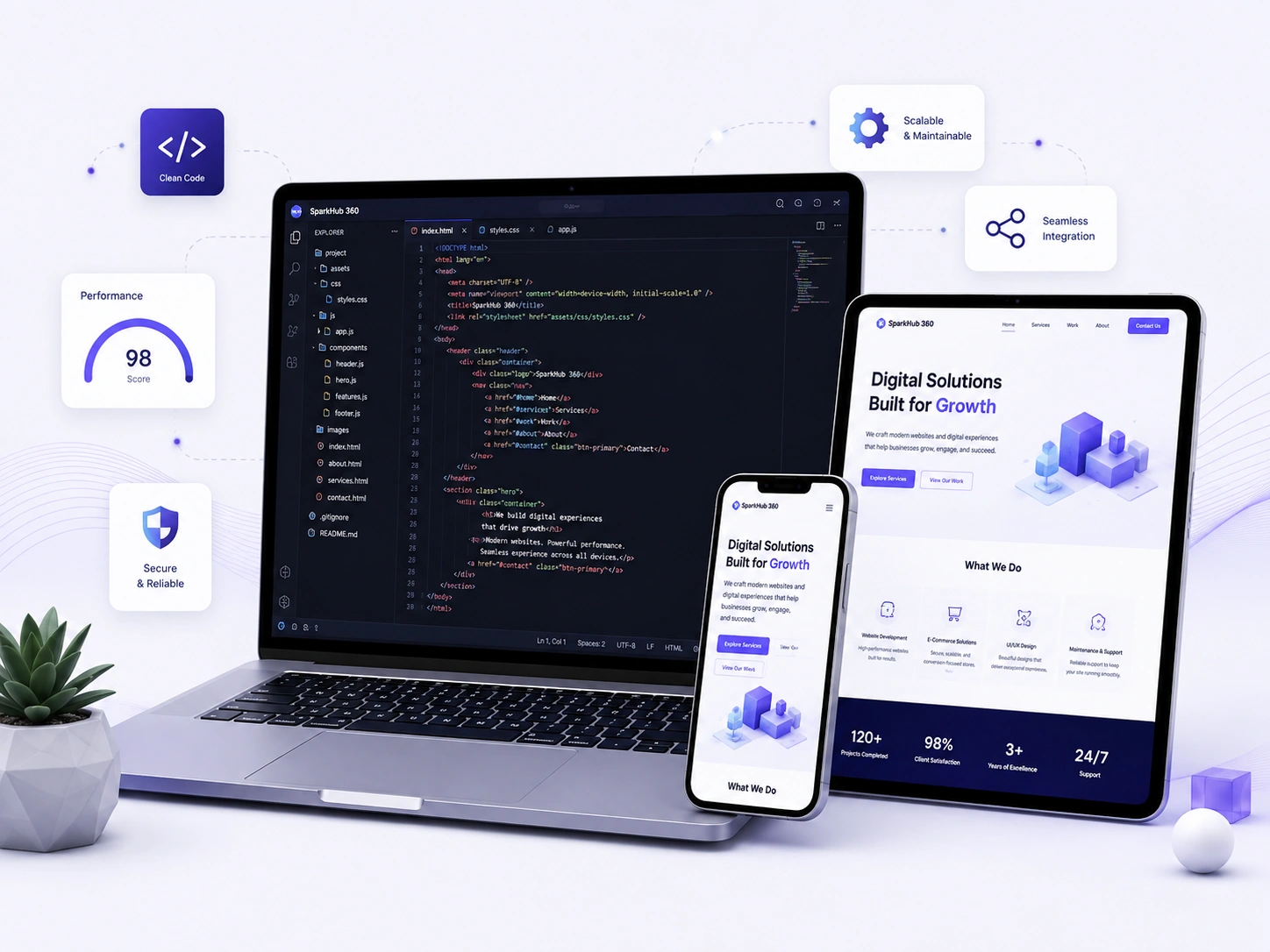
Forms, content, interactions and business functionality that actually work.
Built to behave properly across desktop, tablet and mobile.
Prepared for useful APIs, tools, workflows and business systems.
Structured so future updates and improvements remain practical.
What development actually does
Website development is the part that makes the design functional. It connects pages, content, forms, business logic and useful integrations so the website can actually support day-to-day business activity.
Contact forms, lead forms and other actions can be connected to the right workflow instead of simply sitting on the page.
Services, products, posts, locations and other changing information can be structured so updates remain manageable.
Where appropriate, the website can provide controlled ways to update content without editing the public page code directly.
The website can connect useful tools, APIs, payments, messaging or business processes when the requirement genuinely needs them.
What we develop
We do not treat every project like the same five-page website. The development approach should match the business model, the information being managed and the actions users need to complete.
Service businesses • Companies • Agencies
Clear service structure, enquiries, content pages and a reliable responsive build.
Growing content • Teams • Frequent updates
Manageable content, structured sections and controlled editing where it makes sense.
Retail • Product brands • Online stores
Product structure, cart and checkout flow, payment readiness and mobile shopping behaviour.
Custom workflows • Internal tools • Business processes
Purpose-built screens, logic and workflows around the actual operational requirement.
Clients • Staff • Members • Students
Authenticated access, structured information, user actions and role-based experiences.
APIs • Payments • Messaging • External tools
Connecting the website to useful services and workflows without adding integration for its own sake.
Technology, Reliability & Performance
We use proven, modern technologies to build websites that are fast, stable, responsive and practical to manage as your business grows.
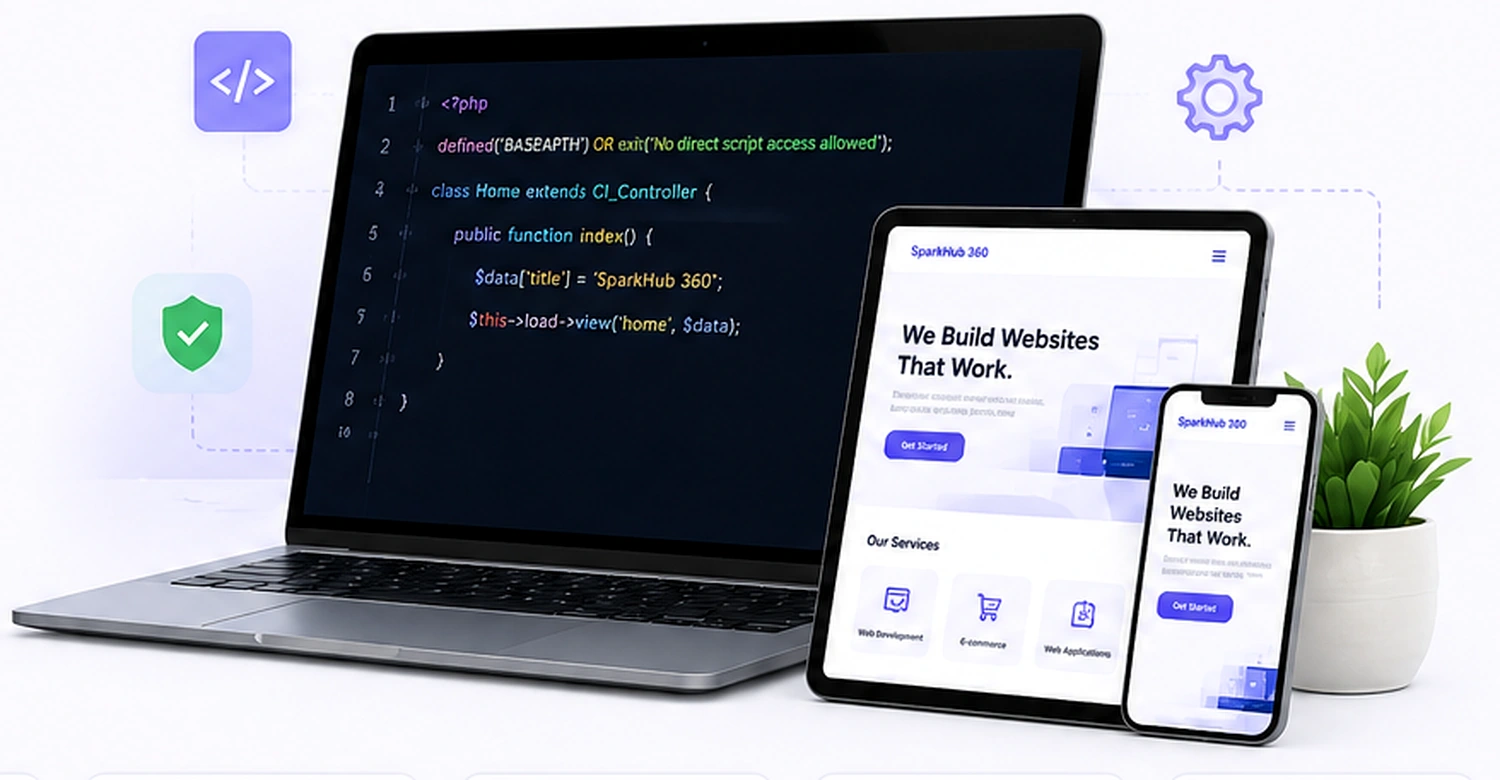
Reliable server-side development for business websites and web applications.
A lightweight MVC framework for structured and maintainable application development.
Structured relational data storage for content, enquiries and business workflows.
Semantic markup, custom responsive CSS and focused browser-side interactions.
Payments, messaging, CRM and approved external services when the project requires them.
Manageable content workflows and custom admin controls where regular updates are needed.
Product, cart, checkout and payment-ready development for online selling requirements.
Performance-aware code and assets for a smoother browsing experience.
Layouts and interactions adapt properly across common screen sizes.
Validation, safe coding practices and controlled application structure.
Semantic structure and technical foundations that support ongoing SEO work.
A maintainable structure that can support sensible future additions.
Questions before you start
A development project should be clear before work begins. These are some of the practical questions businesses usually ask us.
Yes. If the design files and requirements are clear, we can develop the working website from the approved design while keeping responsiveness, functionality and maintainability in focus.
Yes. We can review an existing website and improve selected areas such as layout, responsiveness, functionality, code structure, forms, integrations or content management without rebuilding everything unnecessarily.
Yes, when the requirement genuinely needs it. Custom forms, workflows, dashboards, portals, role-based areas, integrations and other business-specific functionality can be planned around the actual use case.
Where the project needs regular updates, we can provide manageable content or admin controls. The exact editing level depends on the type of website and the information your team needs to maintain.
Yes. Ecommerce requirements can include products, cart and checkout flows, payment readiness and approved payment integrations. The final setup depends on the business model and selected payment provider.
The timeline depends on the number of pages, content readiness, custom functionality, integrations and feedback cycles. We prefer to confirm the scope first and then provide a realistic project timeline.
No. SparkHub 360 can work with businesses across India. Communication, review and delivery can be handled remotely when the project does not require an in-person process.
After launch, the next requirement may be maintenance, content updates, SEO work, new integrations or future improvements. Ongoing support can be discussed based on the project and business requirement.