
Search Intent
Page purpose first
On-Page SEO Services
On-Page SEO That Makes Every Important Page Easier to Understand.
We improve the signals inside your website so search engines and real visitors can understand what each page is about, who it is for and what action should happen next.
Content
Clear topic coverage
Structure
Headings & sections
Internal Links
Connected pages
Page UX
Mobile-friendly
Jamshedpur-based SEO support · On-page optimisation services across India
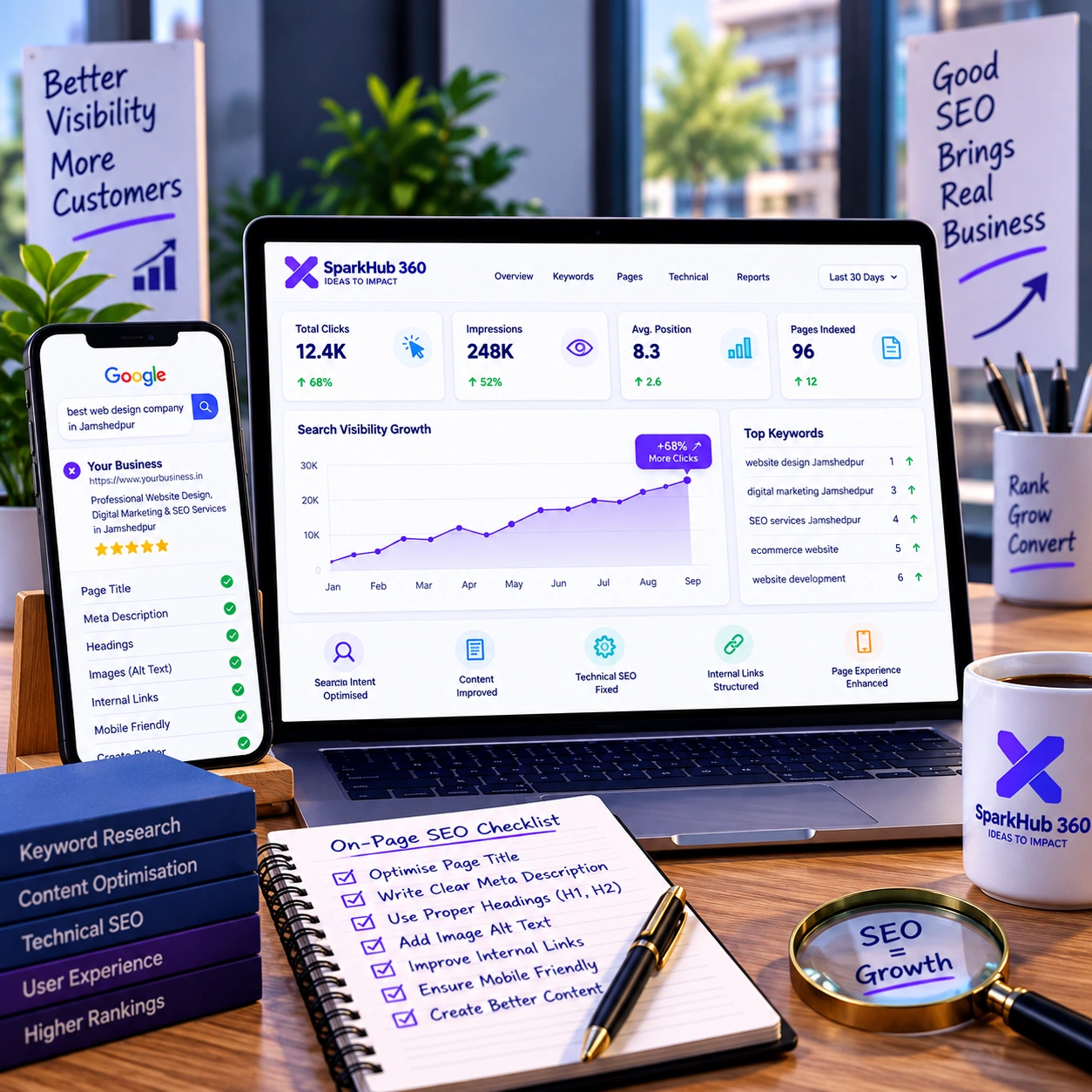
Why On-Page SEO Matters
A Good Page Needs More Than the Right Keyword.
A page can target the correct keyword and still perform poorly if the search intent is mismatched, the title is vague, the headings are confusing, the content is thin or important related pages are not connected properly.
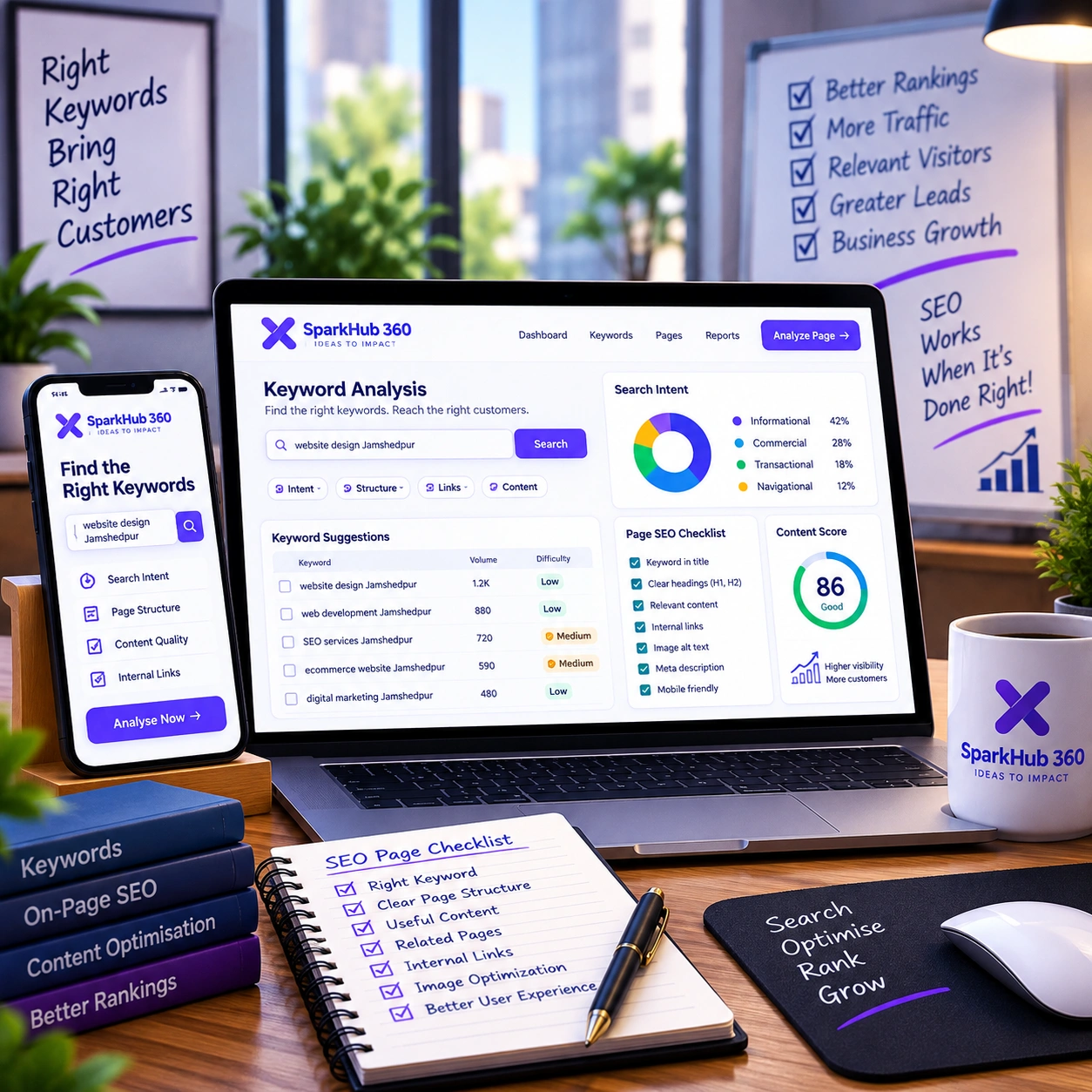
The page should solve the query it targets
We align the page type and content direction with what users are actually trying to find, compare, understand or buy.
Important information should be easy to understand
Headings, paragraphs, examples and calls to action should help readers move through the topic without unnecessary confusion.
Related pages should support each other
Useful internal links help visitors discover relevant services and give search engines more context about your site structure.
SEO pages still need to work properly on mobile
Readable content, practical layout, usable buttons and sensible media sizing all matter when visitors arrive from search.
What We Optimise On the Page
Core On-Page Signals Planned as One Connected System.
We do not optimise individual tags in isolation. Titles, headings, content, links, URLs, images and page experience should all reinforce the same page purpose.
SEO Title & Meta Description
Write page-specific titles and descriptions that accurately communicate the topic and search intent.
H1, H2 & Content Hierarchy
Organise sections so the main topic and supporting questions are easy to follow.
Primary & Supporting Search Terms
Use important language naturally where it adds clarity rather than forcing repetitive keyword density.
Internal Linking
Connect useful related services, supporting articles and relevant next-step pages.
Clean URL & Page Semantics
Keep URLs readable and use meaningful semantic HTML where the page implementation allows it.
Images, Alt Text & Dimensions
Use relevant media, descriptive alternatives where needed and properly sized local assets.
Mobile Readability
Keep headings, paragraphs, buttons, tables and media practical on smaller screens.
Performance & Implementation QA
Review avoidable page weight, broken links, missing metadata and obvious implementation issues.
Content + Structure
Useful Content First. Optimisation Should Make It Easier to Find & Use.
On-page SEO should improve the actual page, not create awkward text written only for crawlers. We organise content around the visitor journey and then strengthen the technical signals around that useful content.
Page Intent
Start with the question this page should answer
We decide whether the page should inform, compare, generate an enquiry, support a location or explain a specific service.
Topic Coverage
Cover the important subtopics without padding
Supporting sections should exist because users need them—not because the page needs a higher word count.
Visitor Journey
Give readers useful next steps
Related services, FAQs, quotation pages and relevant articles should be connected where they genuinely help.
Quality Review
Remove contradictions and unnecessary repetition
We review heading flow, duplicate ideas, broken links and unclear calls to action before calling the page optimised.
Our On-Page SEO Process
From Search Intent To a Page Ready to Compete More Clearly.
We first understand the page purpose and target query, then review the existing implementation, plan improvements, optimise the page and verify the final result.
01
Audit
Review the Existing Page & Search Intent
We review the current title, headings, copy, links, media, page type and how well the content matches the target query.
02
Planning
Define the Primary Topic & Supporting Questions
We map the core page intent, important subtopics and the actions visitors should be able to take.
03
Content
Improve Titles, Headings, Copy & Internal Links
We strengthen the page language and structure while keeping the content natural, useful and conversion-aware.
04
Implementation
Apply Page-Level Technical Improvements
Metadata, URLs, image attributes, semantic structure and other approved page-level improvements are implemented where required.
05
QA
Review the Final Page Before Closure
We verify the important metadata, links, responsive layout, content flow and visible page experience after implementation.
On-Page SEO FAQs
Questions Before Optimising Important Website Pages.
On-page SEO usually works best when it is connected to the broader SEO strategy. The page itself can be improved, but rankings also depend on competition, technical health, authority and how useful the website is overall.
01 Basics What is on-page SEO?
Practical answer
On-page SEO is the optimisation of individual website pages so their topic, structure, content and page-level signals are easier for users and search engines to understand. It commonly includes titles, headings, content, internal links, URLs, image context and usability.
02 Keywords Do you add keywords throughout the page?
Practical answer
We use important search language naturally where it improves clarity. We do not recommend forcing repetitive keyword density or adding awkward phrases simply to increase the number of keyword mentions.
03 Content Will you rewrite existing page content?
Practical answer
When the existing copy does not match the page intent or misses important information, content changes may be recommended. The amount of rewriting depends on the current page and the agreed scope.
04 Internal Links Why are internal links important for on-page SEO?
Practical answer
Useful internal links help visitors reach related information and help search engines understand relationships between pages. They should be relevant and descriptive rather than added everywhere without purpose.
05 Performance Is website speed part of on-page SEO?
Practical answer
Page performance can affect usability and should be reviewed when obvious issues exist. Larger performance or infrastructure problems may also require technical SEO or development work outside a basic on-page scope.
06 Mobile Do you review mobile page experience?
Practical answer
Yes. Important SEO pages should remain readable and usable on smaller screens, including headings, buttons, media, forms and other conversion elements.
07 Results How quickly will rankings improve after on-page SEO?
Practical answer
There is no fixed ranking timeline. Search visibility depends on competition, crawl and indexing, technical health, content quality, site authority and other signals. On-page SEO improves the page foundation but does not guarantee a specific ranking position.
08 Scope How is on-page SEO pricing decided?
Practical answer
Pricing depends on the number of pages, current content quality, keyword and intent research, implementation requirements and whether content rewriting or broader technical work is needed.