
Search Intent
Right queries
Google Ads / PPC Management
Google Ads Built Around Search Intent, Budget Control & Real Conversions.
We plan, launch and optimise paid search campaigns around what potential customers are actually searching for—then connect the ad, landing page and conversion path so the campaign is easier to measure and improve.
Targeting
Location & audience
Landing Page
Message alignment
Tracking
Measurable actions
Optimisation
Continuous review
Jamshedpur-based digital marketing team · Google Ads management for businesses across India
Why Google Ads Can Work
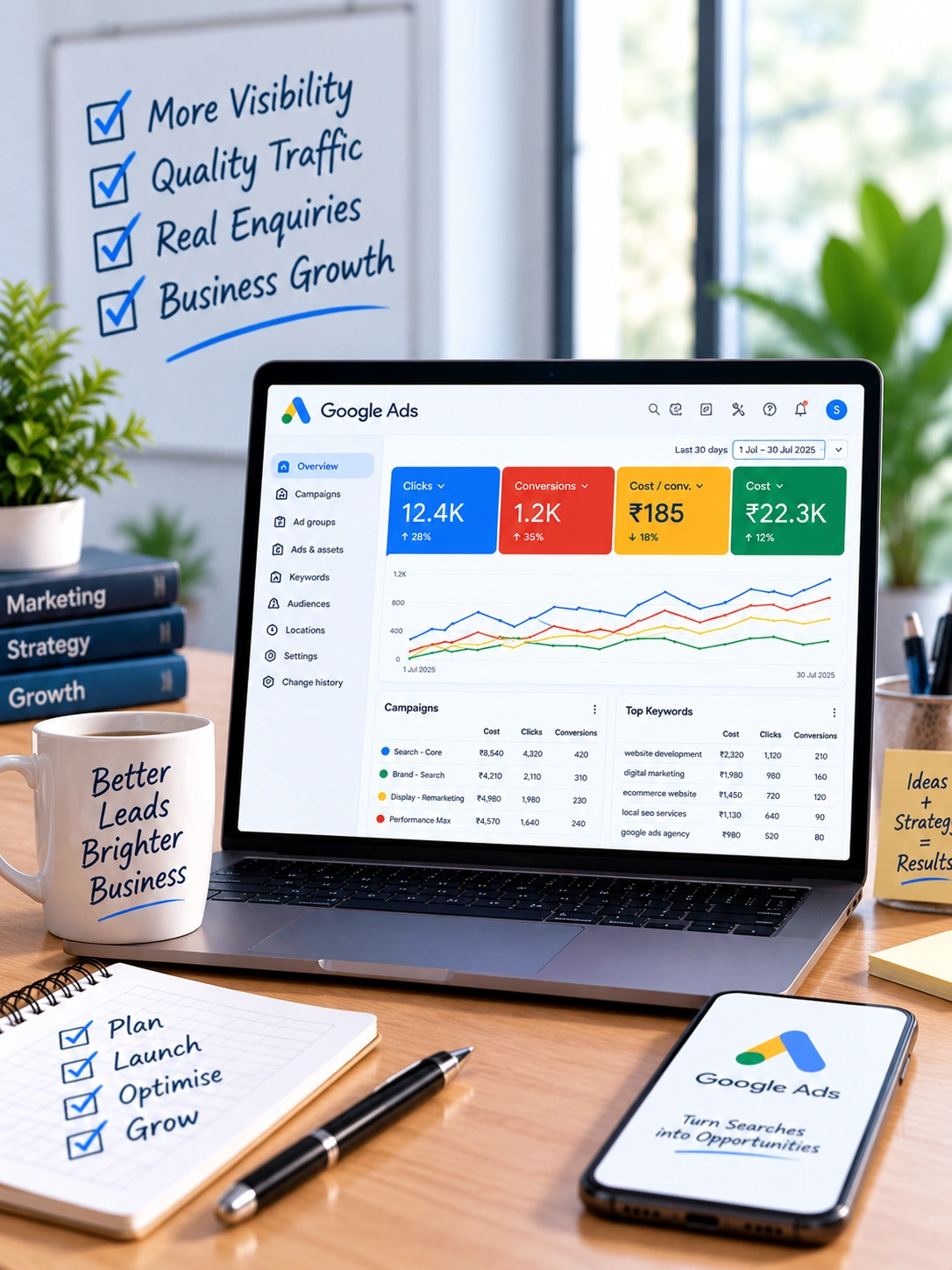
Reach People When They Are Already Searching for the Service.
Paid search can be useful when the business needs faster visibility for high-intent searches. But performance depends on campaign structure, search intent, competition, landing-page quality, tracking and the actual commercial offer.
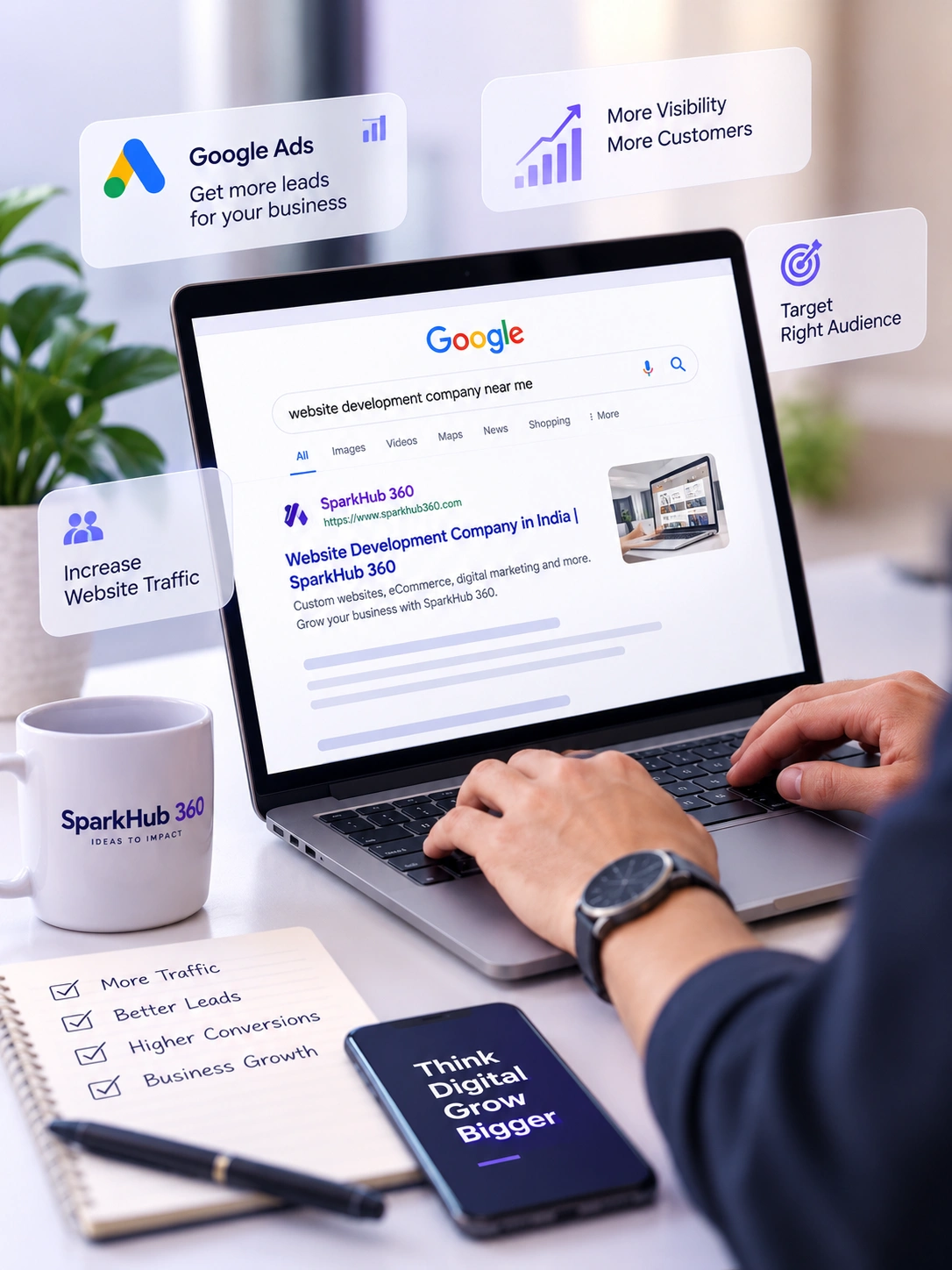
Target searches with commercial relevance
Campaigns should focus on terms that fit the actual service, geography and stage of the customer decision process.
Manage location, budget, schedule and targeting
Paid campaigns provide more direct control over where and how aggressively a business wants to compete for search demand.
Connect clicks with meaningful business actions
Calls, forms and other valid enquiry actions should be tracked so optimisation is not based only on impressions or clicks.
Use campaign data to improve over time
Search terms, ad response, device, location and conversion patterns can help refine the campaign as useful data accumulates.
Google Ads Campaign Setup
The Campaign Is More Than Keywords + a Daily Budget.
A useful PPC setup connects keyword intent, ad copy, landing pages, negative keywords, conversion tracking and campaign controls so the system can be evaluated as one customer journey.
Keyword & Search-Intent Mapping
Group relevant searches by service, intent and location so ads are not triggered by broad, unrelated demand.
Ad Copy Aligned to the Query
Use clear service, value and action messaging that reflects what the searcher expects to find after clicking.
Landing-Page Alignment
Send users to a page that directly answers the query instead of forcing every campaign into the homepage.
Negative Keyword Control
Exclude clearly irrelevant searches to reduce wasted clicks and keep the campaign closer to commercial intent.
Geographic Targeting
Match campaign coverage with the real service area instead of advertising in locations the business cannot serve properly.
Mobile & Device Review
Review how campaign performance and landing-page behaviour differ across mobile and desktop traffic.
Ad Schedule & Response Readiness
Campaign timing should consider when the business can actually respond to calls and enquiries efficiently.
Conversion Tracking
Track meaningful actions such as valid forms or calls so campaign optimisation has business context.
Budget + Optimisation
Spend Should Follow Useful Search Demand & Conversion Evidence.
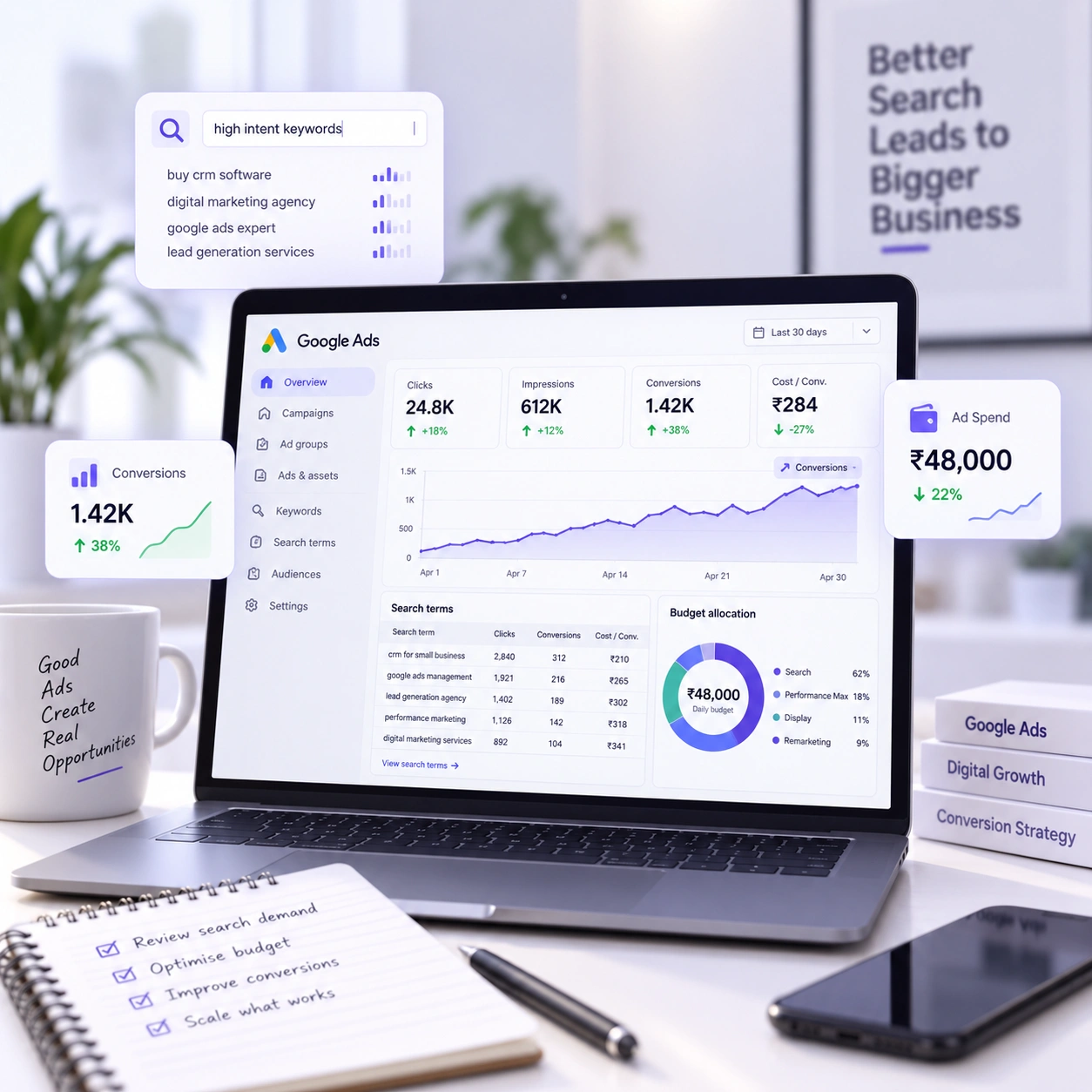
We review search terms, campaign structure, wasted traffic, ad response, landing-page behaviour and conversion quality so budget decisions are not made from click volume alone.
Search Terms
Review what people actually typed
Search-term data helps identify irrelevant traffic, new negative keywords and useful demand patterns.
Ads
Improve messaging and relevance
Ad copy can be refined around stronger service value, clearer intent and better alignment with the landing page.
Landing Page
Fix the page when the click is not the problem
If relevant traffic reaches a weak, confusing or slow page, campaign performance can suffer even when the keyword is correct.
Lead Quality
Judge conversions by business usefulness
Where possible, enquiry quality should inform campaign decisions rather than treating every form submission as equally valuable.
Our Google Ads Process
From Search Demand To Launch, Measurement & Ongoing Optimisation.
We start by understanding the service, margins, locations and enquiry flow, then map search intent, prepare campaign structure and landing pages, configure tracking, launch carefully and optimise from real data.
01
Business Review
Understand Services, Locations & Lead Economics
We identify priority services, service areas, typical enquiry value, response process and what the campaign is expected to achieve.
02
Research
Map Search Intent & Campaign Structure
We group relevant queries and identify negative keyword themes, location boundaries and the most suitable landing destinations.
03
Setup
Prepare Ads, Landing Pages & Tracking
Campaign messaging, landing-page alignment and conversion measurement are prepared before meaningful spend begins.
04
Launch
Launch With Controlled Budget & Targeting
The campaign starts with defined geography, search themes and measurement so early data can be interpreted clearly.
05
Optimisation
Review Search Terms, Conversions & Lead Quality
We refine targeting, negatives, ads and landing experience based on evidence while keeping the business objective in focus.
Google Ads FAQs
Questions Before Putting Budget Into Paid Search.
Google Ads can generate useful demand quickly, but cost and performance vary by industry, location, competition, offer, landing page and campaign quality. A campaign should be treated as a measurable acquisition channel, not a guaranteed lead machine.
01 Basics What is Google Ads / PPC?
Practical answer
Google Ads is a paid advertising platform. In search campaigns, advertisers can compete to show ads for relevant search queries and generally pay based on ad interactions such as clicks, subject to the campaign setup and bidding model.
02 Business Fit Is Google Ads suitable for every business?
Practical answer
Not always. It is usually more practical when there is measurable search demand, enough commercial value per customer, a responsive enquiry process and a landing page that can convert relevant traffic.
03 Landing Page Do I need a separate landing page?
Practical answer
Not in every case, but a dedicated or highly relevant service page often makes the customer journey clearer. Sending every ad to the homepage can reduce message alignment for specific services or locations.
04 Tracking What conversions should be tracked?
Practical answer
That depends on the business. Useful actions may include valid enquiry forms, qualified calls or other meaningful lead events. Tracking should reflect real business outcomes as closely as practical.
05 Budget How much Google Ads budget do I need?
Practical answer
There is no universal amount. Budget depends on industry competition, expected click costs, geography, campaign breadth and the amount of data required to evaluate performance. Ad spend is normally separate from management/service fees.
06 Results Can you guarantee leads or ROAS?
Practical answer
No responsible agency can guarantee a fixed number of leads, revenue or ROAS because performance depends on market demand, competition, pricing, offer quality, sales response, website experience and other factors outside the ad account.
07 Traffic Quality What are negative keywords?
Practical answer
Negative keywords help prevent ads from showing for search terms that are not relevant to the campaign. They can reduce obvious wasted traffic and keep the search intent closer to the actual service.
08 Pricing Is ad spend included in SparkHub management fees?
Practical answer
Normally the advertising budget paid to the ad platform is separate from campaign setup or management fees. The exact commercial structure should be confirmed in the quotation before campaign work begins.