
Why a Website Is Important for Business in 2026
Discover why every business needs a professional website in 2026 to build trust, attract customers, generate leads and support long-term growth.
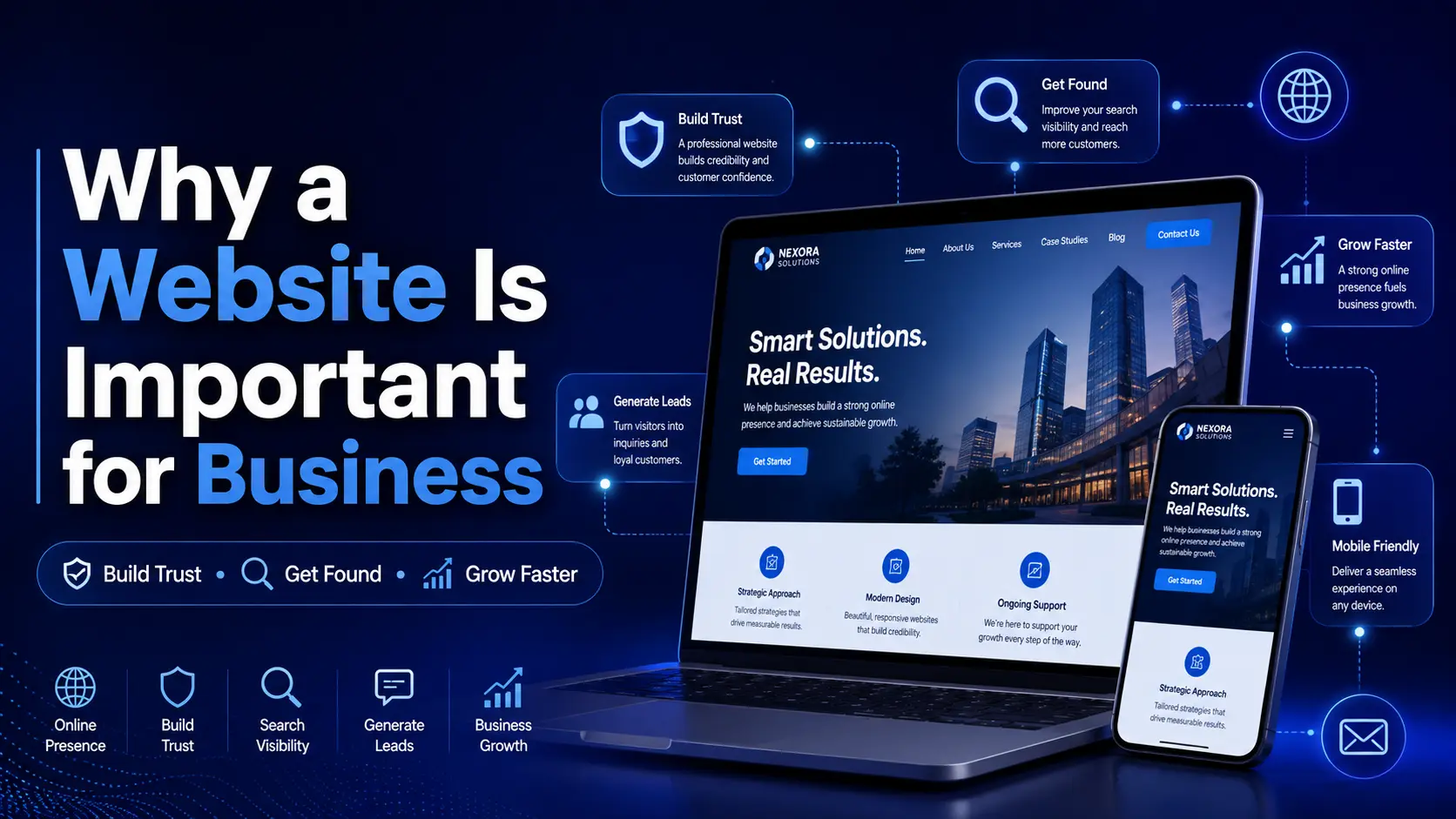
Today, customers often search online before calling, visiting or purchasing from a business. They may want to check your services, location, contact details, experience, pricing information or simply confirm that the business is genuine.
This is one of the main reasons a website is important for business in 2026. A professional website gives your company a permanent digital presence where customers can learn about your business, understand what you offer and contact you whenever they are ready.
Social media, WhatsApp and online marketplaces can all support a business, but they do not completely replace a website that you control.
Whether you operate a local service business, educational institute, ecommerce store, professional firm, franchise, startup or growing company, a well-developed website can become an important part of your sales, marketing and customer communication system.
Why Does a Business Need a Website Today?
A business website works as an official online destination for your company.
Instead of depending only on customers finding you through social media, directories or offline advertising, you can provide one structured place containing your services, business information, contact details and important customer resources.
A website can help a business:
Build credibility and professional trust
Appear in relevant online searches
Explain products and services clearly
Generate enquiries and leads
Support customers outside business hours
Reach customers beyond the local market
Promote offers, services and new products
Support digital marketing campaigns
Collect customer enquiries systematically
Create a foundation for future online growth
1. A Website Builds Business Credibility
Before contacting a company, many customers want to know whether the business appears professional and trustworthy.
A well-designed website can provide important credibility signals such as:
Business name and branding
Detailed service information
Business address and service areas
Phone and WhatsApp contact details
Professional email address
About the company information
Portfolio or genuine previous work
Policies and terms where applicable
Secure HTTPS connection
Customers can review this information before making an enquiry.
A business with a professional website generally has more opportunity to explain its expertise than a business relying only on a phone number or social media profile.
2. Customers Can Find Your Business Through Search Engines
One of the strongest benefits of having a website is the opportunity to appear when potential customers search for relevant products or services.
For example, someone may search for:
website development company near me
computer institute in Jamshedpur
business website designing services
local SEO company
ecommerce development company
digital marketing services for small businesses
Without a website, your ability to build search visibility around your services, expertise and useful content becomes significantly more limited.
A properly developed website can support SEO through clean URLs, relevant content, internal linking, metadata, mobile usability, structured information and good technical architecture.
Learn more about improving business visibility through our SEO services.
3. Your Website Works 24 Hours a Day
Your physical office may have fixed working hours, but your website can provide business information throughout the day.
A potential customer can visit your website in the morning, evening or even outside your office hours and still:
Read about your services
Check frequently asked questions
View your work
Submit an enquiry
Request a quotation
Send a WhatsApp message
Find your phone number
Understand your business before contacting you
This does not mean that a website replaces personal communication. Instead, it helps customers reach the stage where they are better informed before speaking with your team.
4. A Website Helps Generate Business Leads
A professional business website should not only provide information. It should guide interested visitors toward a useful next action.
Common lead-generation actions include:
Contact forms
Request quotation forms
Request callback forms
WhatsApp buttons
Phone call buttons
Email enquiries
Appointment requests
Product purchases
Good website development makes these actions easy to find and simple to complete.
A complicated website may actually reduce enquiries if customers cannot quickly understand what the business offers or how to contact it.
5. A Website Gives You More Control Than Social Media
Social media platforms are useful for reaching audiences, sharing updates and interacting with customers.
However, your business does not fully control those platforms.
Platform algorithms, policies, account restrictions, page layouts and available features can change.
Your own website gives you much greater control over:
Your business presentation
Your page structure
Your content
Your navigation
Your lead forms
Your branding
Your search optimization
Your customer journey
The strongest approach is often to use your website as the central business platform while using social media, search engines, WhatsApp and advertising channels to bring visitors to it.
6. A Website Helps Explain Your Services Properly
Many businesses offer services that cannot be explained properly in a short social media post or advertisement.
A website gives you dedicated space to explain:
What the service is
Who it is suitable for
What problems it solves
How your process works
What customers can expect
Frequently asked questions
How to contact your company
This is especially valuable for service businesses where customers compare multiple providers before making a decision.
7. A Professional Website Strengthens Your Brand
Branding is more than a logo.
Your website allows you to present a consistent identity through:
Logo
Colours
Typography
Photography
Tone of communication
Service presentation
Business values
Consistency makes the business easier to recognize and can create a more professional impression across marketing channels.
For businesses planning a new visual presence, explore our website designing services.
8. A Website Helps Businesses Reach Customers Beyond Their Location
A business may operate from one city while serving customers across a state, across India or internationally.
A website makes it possible to present services to customers who may never physically visit the office.
For example, a web development company based in Jamshedpur can still provide services to businesses in Delhi, Mumbai, Bengaluru, Kolkata, Ranchi or other locations because project communication and delivery can be handled digitally.
This makes a professional online presence especially valuable for companies whose services are not limited to a single local market.
9. A Website Supports Local Businesses
Websites are not only useful for large companies.
Local businesses can also benefit significantly from having accurate and useful information online.
A local business website can display:
Location
Service areas
Business hours
Contact information
Directions
Services
Frequently asked questions
Combined with local SEO and a properly maintained business profile on relevant search platforms, a website can improve the overall digital presence of a local business.
10. A Website Supports Digital Marketing
Digital marketing becomes much more effective when campaigns have a strong website or landing page to send visitors to.
A website can support:
Google Ads
Meta and Facebook advertising
Instagram promotions
Email marketing
Search engine optimization
Content marketing
Lead generation campaigns
Dedicated pages can be created around specific campaigns, services or audiences instead of sending every visitor to a generic social media profile.
Explore our digital marketing services for more information about online business promotion.
11. A Website Can Reduce Repetitive Customer Questions
Businesses frequently receive the same questions from different customers.
Examples include:
What services do you provide?
Where are you located?
What are your business hours?
How does your process work?
How can I request a quotation?
Do you provide services outside my city?
A clear website can answer many of these questions before the customer contacts the business.
This can make conversations more productive because potential customers arrive with a better understanding of your services.
12. A Website Can Support Online Sales
For businesses selling products, ecommerce functionality can turn a website into an online sales channel.
An ecommerce website may support:
Product listings
Categories
Search and filtering
Shopping cart
Checkout
Online payments
Customer accounts
Order management
Even businesses that do not sell products online can use website forms to generate enquiries for services.
13. A Website Can Automate Business Processes
A modern business website can do more than display pages.
Custom web development can automate or simplify processes such as:
Customer registration
Admission enquiries
Course applications
Franchise enquiries
Service requests
Appointment booking
Quotation requests
Document submissions
Online payments
The goal should not be to automate everything. The website should automate only those processes where automation creates a genuine business benefit.
14. A Website Helps You Publish Useful Content
Blog articles, guides and educational resources allow a business to answer questions that potential customers are already searching for.
Useful content can help demonstrate expertise while also expanding the range of topics for which your website may become discoverable.
For example, a web development company may publish useful guides about website planning, SEO, security, ecommerce, performance and website maintenance.
The content should genuinely answer user questions rather than being created only to repeat keywords.
15. A Website Creates a Long-Term Digital Asset
When properly maintained, your website becomes part of your business infrastructure.
Over time it can accumulate:
Service content
Useful articles
Search visibility
Internal links
Customer resources
Landing pages
Business information
This makes the website different from a short-term advertisement that disappears when the campaign ends.
Is Social Media Enough Without a Website?
For most established or growth-focused businesses, relying entirely on social media creates unnecessary limitations.
Social media is excellent for:
Audience engagement
Short updates
Community building
Visual promotion
Advertising
A website is better suited for:
Detailed business information
Structured service pages
Search visibility
Lead-generation forms
Long-form educational content
Custom business functionality
Greater control over presentation
The two channels should normally complement each other instead of being treated as alternatives.
Does Every Small Business Need a Website?
Not every small business needs a complicated website, but many businesses can benefit from having a professional online presence that they control.
A small service business may initially need only:
A clear homepage
About page
Service pages
Contact details
WhatsApp and call actions
Contact form
Basic SEO foundation
The website can then grow as the business develops.
It is usually better to start with a focused website that solves real business needs than to build dozens of unnecessary pages and features.
What Makes a Good Business Website?
Simply owning a domain and publishing a few pages is not enough.
A professional business website should be:
Mobile responsive
Fast loading
Easy to navigate
Secure
Accessible
SEO friendly
Easy to understand
Consistent with the business brand
Focused on useful customer actions
Maintainable over the long term
What Information Should a Business Website Include?
The exact structure depends on the business, but a typical professional website may include:
Homepage
About Us
Services
Individual service pages
Portfolio or previous work where applicable
Frequently asked questions
Blog or useful resources
Contact page
Privacy policy
Terms where appropriate
Ecommerce stores, educational portals, franchise systems and custom web applications may require additional functionality.
How Much Does a Business Website Cost?
Website cost depends on what needs to be built.
Important cost factors can include:
Number of pages
Custom design requirements
Backend functionality
Admin panel requirements
Ecommerce features
Payment gateway integration
Custom forms
External integrations
Content requirements
SEO requirements
Hosting and deployment
Ongoing maintenance
Businesses should compare website proposals based on scope and long-term value rather than looking only for the lowest initial price.
Frequently Asked Questions
Why is a website important for a small business?
A website gives a small business a professional online presence where customers can understand its services, verify contact information and make enquiries. It can also support search visibility and digital marketing.
Can a business survive without a website?
Some businesses can operate without one, particularly when they depend heavily on referrals or marketplaces. However, not having a website can limit control over online visibility, service presentation and long-term digital growth.
Is a website still important when a business has Instagram and Facebook?
Yes. Social media is useful for engagement and promotion, while a website provides greater control over detailed information, SEO, lead generation, branding and business functionality.
How does a website help grow a business?
A website can support growth by increasing visibility, generating enquiries, explaining services, supporting advertising campaigns, reaching customers in more locations and enabling online transactions or automated processes.
Does a business website help with Google search visibility?
A properly structured website provides pages that search engines can crawl and understand. Search visibility also depends on content quality, competition, technical SEO, authority and many other factors, so having a website does not guarantee rankings.
Should a new business create a website immediately?
A new business should consider building a website once its basic identity, services, contact information and customer requirements are sufficiently clear. The first website can remain focused and expand later.
Final Thoughts
The importance of a website for business continues to go far beyond simply having an online address.
A professional website can help build credibility, explain your services, attract potential customers, generate enquiries, support digital marketing and create a platform that grows with your business.
The most effective website is not necessarily the largest or most complicated one. It is a website that clearly communicates what the business offers, works properly on mobile devices, loads efficiently, protects customer information and makes the next step easy for visitors.
If your business is planning a new website or upgrading an existing one, explore our website development services or contact SparkHub 360 to discuss your requirements.